
Why Montessori?
At Satori Montessori, we believe that education is not something that is given to the child, it is something the child naturally unfolds within.
The Montessori approach, developed by Maria Montessori, is based on deep observation of children and a profound respect for their individuality. It recognises that each child learns at their own pace and possesses an innate desire to explore, understand, and grow.
Unlike traditional education, Montessori is not focused on rote learning or early academic pressure. Instead, it nurtures the whole child, intellectually, emotionally, socially, and physically.

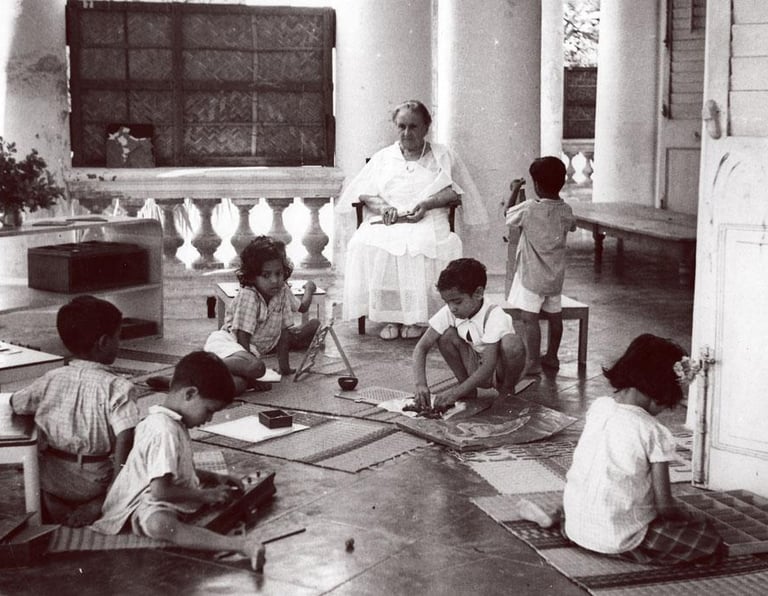
Montessori classrooms are mixed-age communities where children learn not only from the adult, but also from one another. This fosters empathy, collaboration, and a strong sense of belonging.
Most importantly, Montessori education helps the child develop:
A lifelong love for learning
Independence
Confidence
Self-discipline
At Satori Montessori, our goal is not just to teach, but to support each child in becoming aware of who they are, and who they are becoming.
In a carefully prepared environment, children are given the freedom to choose meaningful work, develop concentration, and build independence. Through hands-on materials and real-life experiences, learning becomes joyful, purposeful, and deeply engaging.
The Montessori Approach
At Satori Montessori, we believe children learn best in an environment that respects their individuality, encourages independence, and nurtures a genuine love for learning. The Montessori approach is designed to support the whole child through purposeful experiences, meaningful work, and calm guidance.
Mixed-Age Classrooms
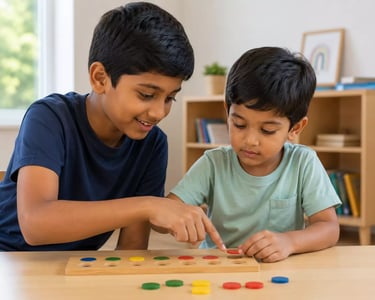
Children of different ages learn together in the same environment (for example, 3–6 years).
Younger children learn by observing older ones, while older children build confidence and empathy by helping younger peers.
This creates a natural, respectful community, just like in real life.
Learning Through Hands-On Materials
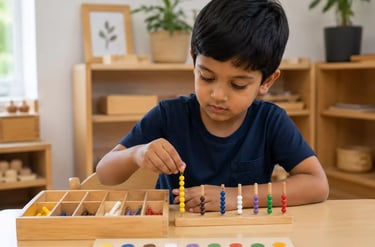
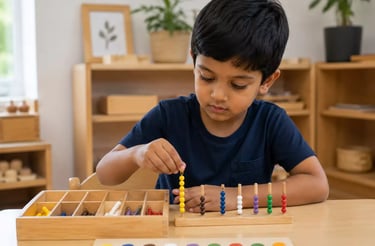
Children don’t just listen, they learn by doing.
Specially designed materials help children understand concepts through touch, movement, and exploration, making learning deeper and more meaningful.
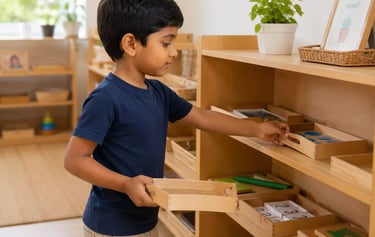
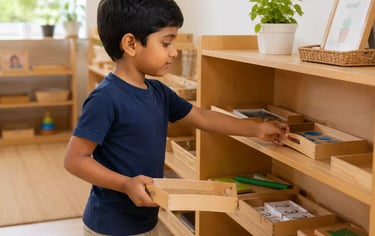
Children are given the freedom to choose their work, move around, and follow their interests, within clear and respectful boundaries.
This builds independence, responsibility, and self-discipline.
Freedom Within Limits
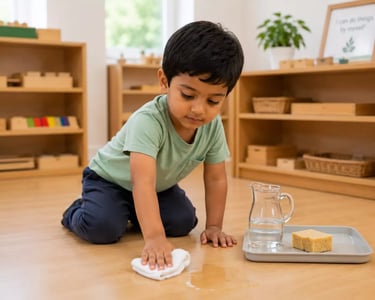
Focus on Independence
From a very young age, children are encouraged to do things for themselves, dressing, eating, cleaning, and problem-solving.
This builds confidence and a strong sense of
“I can do it.”
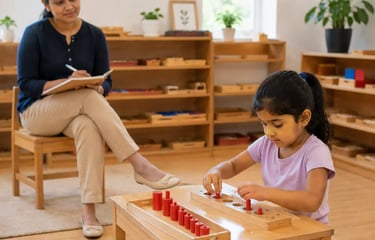
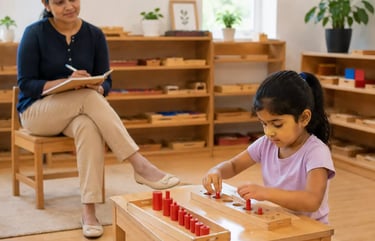
Individualised Learning
Every child learns at their own pace.
Instead of one teacher teaching the same thing to everyone, each child is guided based on their own development and readiness.
The adult is not the center of the classroom.
Instead of constantly instructing, the adult observes, guides, and supports, allowing the child to discover and learn independently.
The Role of the Adult
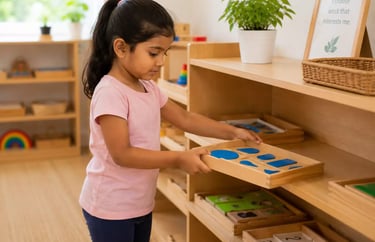
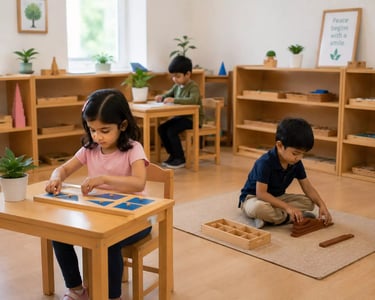
Uninterrupted Work Cycles
Children are given long periods of uninterrupted time to focus on their work.
This helps develop concentration, patience, and deep engagement, skills that are essential for lifelong learning.
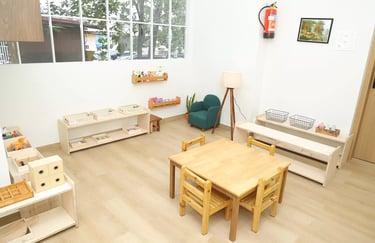
Calm and Prepared Environment
The classroom is simple, ordered, and beautiful, designed specifically for the child.
Everything is accessible, purposeful, and invites meaningful activity.
Montessori is not just a method of education, it is a way of understanding and respecting the child.
Rooted in the work of Maria Montessori, it nurtures independence, confidence, and a lifelong love for learning.
Frequently asked questions
Will my child be ready for a traditional school later?
Yes, children from Montessori environments transition very well into other systems. They tend to be independent, confident learners who can think for themselves, manage their time, and adapt to new expectations. While the structure may feel different initially, their strong foundation in concentration, responsibility, and understanding helps them adjust quickly and often excel.
How do children learn discipline without strict rules?
In Montessori, discipline develops from within rather than being imposed from outside. Children are given freedom within clear and consistent limits, such as respecting others, themselves, and the environment. Through meaningful work, repetition, and observing others, they gradually develop self-control, responsibility, and awareness of their actions. This leads to a more lasting and genuine form of discipline.
What if my child doesn’t choose to do academic work?
Children are naturally drawn toward activities that support their development when they are in a well-prepared environment. The adult carefully observes and gently guides the child toward a range of materials, including academic ones, at the right time. What may look like “just play” often builds the foundation for later academic learning, and over time, children begin to engage more deeply with language and mathematics.
How do you handle conflicts between children?
Conflicts are seen as opportunities for learning. The adult supports children in expressing themselves, listening to each other, and finding respectful solutions. Rather than immediately solving the problem for them, we guide them toward understanding emotions, taking responsibility, and restoring relationships. Over time, children develop strong social and communication skills.
Why are children of different ages grouped together?
Mixed-age groups allow children to learn from one another naturally. Younger children observe and are inspired by older ones, while older children reinforce their own learning by helping others. This creates a collaborative, respectful community rather than a competitive one, and supports social, emotional, and intellectual growth.
What is the role of homework in Montessori?
In the early years, there is no formal homework, as children complete meaningful, focused work during their time at school. We believe that young children need time at home for rest, family, and unstructured play. As children grow older, work may extend beyond the classroom in a purposeful way, but it is never given as repetitive or unnecessary tasks.
How do you track a child’s progress without tests?
Progress is observed continuously rather than measured through formal tests. The adult carefully watches each child’s work, concentration, choices, and development over time. Detailed observations and records help us understand where the child is and what they need next. This allows for a more accurate and holistic understanding of each child’s growth.
What if my child is shy or takes time to adjust?
We respect each child’s pace of settling in. Some children observe quietly before participating, and this is a natural and important part of adjustment. The adult provides a calm, secure environment and builds trust gradually, allowing the child to feel comfortable and confident in their own time.
What should we do at home to support Montessori?
The most important thing is to support independence and respect the child’s abilities. Simple things like allowing your child to dress themselves, help with daily tasks, and make small choices can make a big difference. Maintaining a calm, consistent routine and limiting overstimulation also supports the child’s development.
How much freedom do children really have?
Children have the freedom to choose their work, move, and interact within clearly defined limits. This freedom is not unlimited—it is guided by responsibility, respect, and the needs of the group. Within these boundaries, children learn to make thoughtful choices and take ownership of their actions.
Will my child learn to read and write at the same pace as others?
Children in Montessori often learn to read and write through a natural, interest-driven process rather than a fixed timeline. Some may begin earlier, others later, but the focus is on deep understanding rather than speed. When children are ready, their progress is often rapid and confident.
What if my child makes mistakes?
Mistakes are seen as a natural and valuable part of learning. Many Montessori materials are designed so that children can recognise and correct their own errors without adult intervention. This helps build confidence, resilience, and a willingness to try again.


Quick Links
Why Montessori?
About Us
Satori Movement Community
Opening Hours:
Mon–Fri: 8:00 AM – 6:00 PM
Sat–Sun: Closed
Ground Floor, Pujari Niwas, Park Rd, near Bank of Baroda Navpada, Navpada, Vile Parle East, Vile Parle, Mumbai, Maharashtra 400057
📍Find us on Google Maps
© 2026 Satori Montessori . All rights reserved.
Powered & Secured by


Admissions